
Update August 18, 2026 – 15:40:
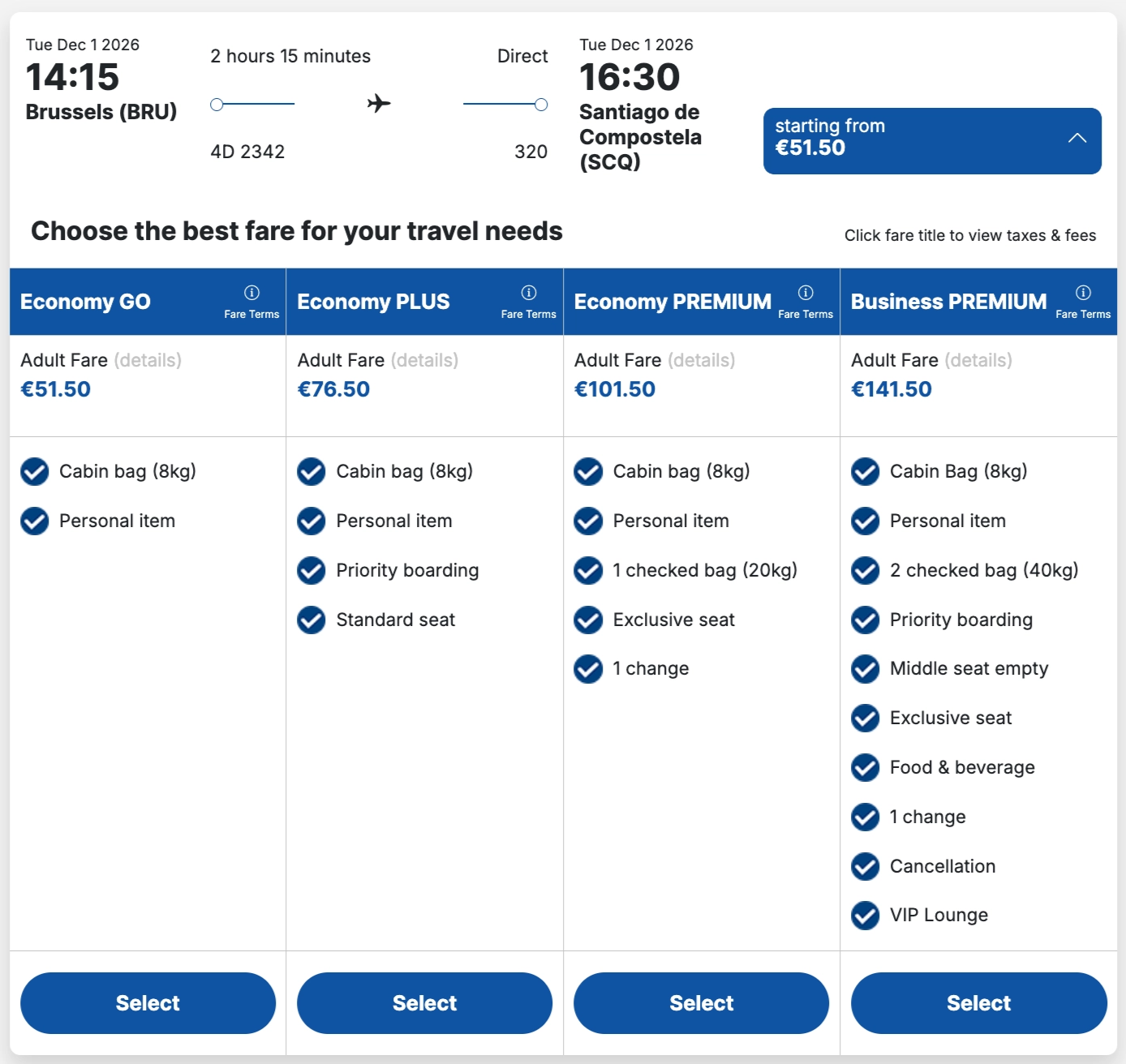
Fly2Galicia has opened ticket sales on its website. According to the booking engine, flights will be operated by Romanian charter and ACMI airline FLYYO using Airbus A320 aircraft.
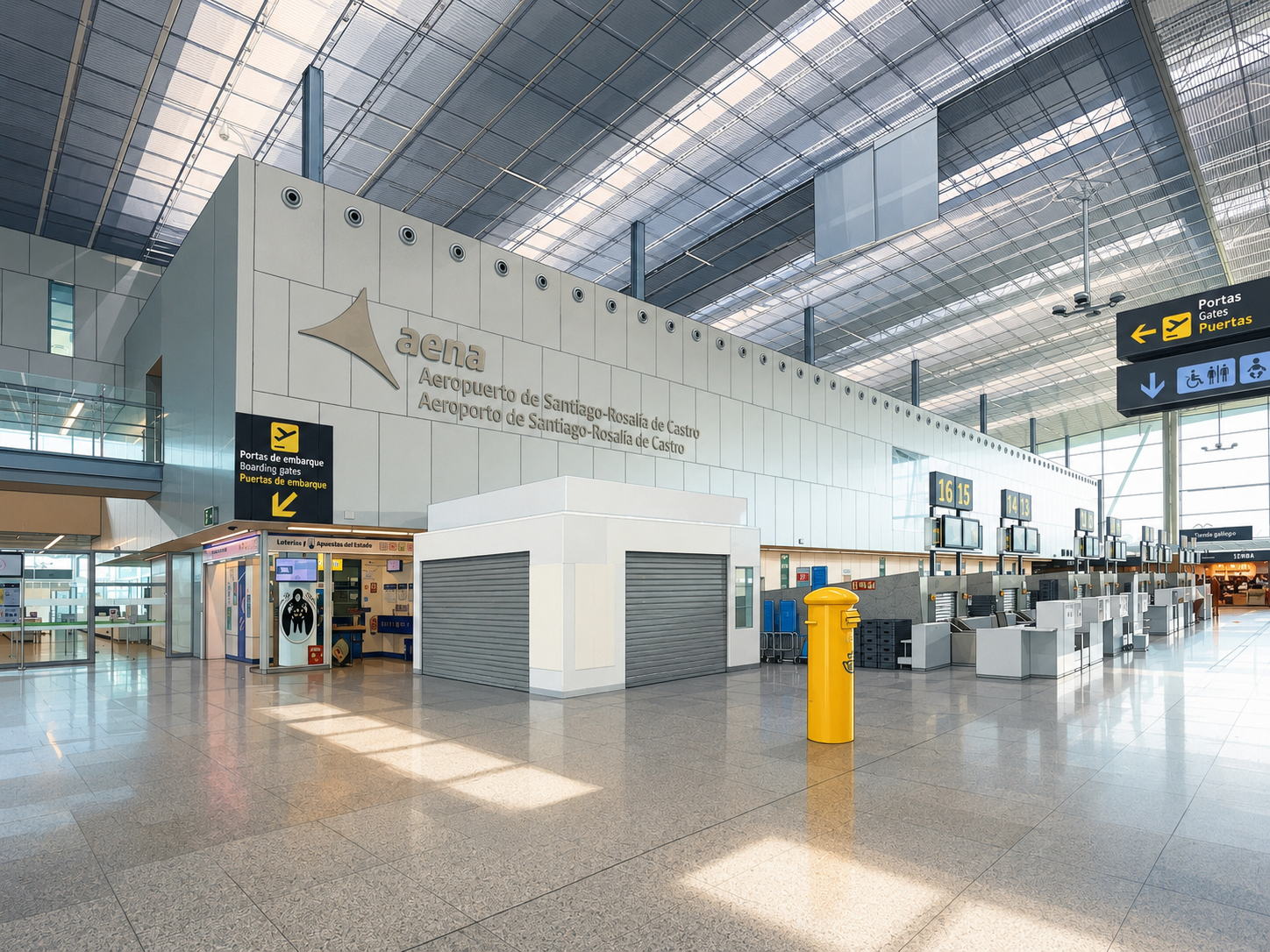
Start-up airline brand Fly2Galicia has announced it will commence operations on December 1st, 2026, connecting Santiago de Compostela (SCQ) with 17 weekly frequencies to three domestic destinations and five more across Europe.
The airline does not hold its own Air Operator Certificate (AOC) and will instead rely on a wet-lease agreement. Tickets for flights to Alicante, Brussels, Granada, Milan, Munich, Prague, Venice, and Zaragoza went on sale on August 18th, with the Romanian charter airline FLYYO as the operating carrier.
What makes this development so interesting is not merely the launch of a new airline - after all, such ventures are often short-lived or fail before their first commercial flight - but the wider interest of airlines in Santiago.
Santiago Is Rebuilding After Ryanair
Santiago has recently welcomed United Airlines with seasonal transatlantic flights to Newark (EWR). At the same time, low-cost carrier Wizz Air has brought forward the opening of its new Santiago base to December 17, just over two weeks after Fly2Galicia plans to operate its first flights.
Wizz Air’s expansion will help fill much of the capacity void left by Ryanair following the withdrawal of its two-aircraft base at the start of the 2025/26 winter season. Ryanair attributed the decision to what it considers excessive and uncompetitive airport charges imposed by Aena.
The base closure entailed the end of seven domestic routes and a reduction of 453,000 seats for the winter season. A substantial amount considering the airport only handled around 3.6 million passengers in 2024. Wizz Air now plans to operate ten routes from the airport, offering 900,000 seats annually.
Tourism In España Verde
The growing airline interest in Santiago also coincides with the increasing popularity of “España Verde” (Green Spain). This joint tourism initiative of Spain’s northern regions, Galicia, Asturias, Cantabria, and the Basque Country, has experienced strong growth in tourism numbers since the pandemic.
In 2023, the region welcomed almost 17 million visitors, around four million more than in 2019. United’s entry in particular underscores Galicia’s growing relevance as an inbound tourism market.
Factors contributing to this growth beyond the initiative’s promotional efforts include a milder summer climate compared to other regions, as well as Spain’s efforts to disperse visitors across the country to relieve overtourism pressures in places such as Barcelona and Mallorca.
Fly2Galicia Still Has A Lot To Prove
According to various sources, Fly2Galicia’s fares will start at €19 for domestic routes and €39 for European ones, with hand luggage included in the price. While the airline will clearly need to achieve a substantially higher average fare, this appears to be an incredibly aggressive pricing strategy.
Low-cost carriers such as Ryanair and Wizz Air can often justify these low prices when launching new routes due to their massive scale. Without the same scale, ancillary revenue generation and low unit costs, however, it becomes questionable whether Fly2Galicia can sustainably compete at similar fares.
Moreover, the new airline can expect heavy competition from Ryanair on its routes to Alicante and Brussels, where Ryanair serves Brussels South Charleroi Airport throughout the summer season. Fly2Galicia’s new route to Zaragoza will also be served three times a week by Wizz Air from December.
| Airline | Destinations |
|---|---|
| Wizz Air | Bilbao (BIO), Fuerteventura (FUE), Gran Canaria (LPA), Madrid (MAD), Málaga (AGP), Rome (FCO), Tenerife North (TFN), Valencia (VLC), Zaragoza (ZAZ), Warsaw (WMI) |
| Fly2Galicia | Alicante (ALC), Brussels (BRU), Granada (GRX), Milan (MXP), Munich (MUC), Prague (PRG), Venice (VCE), Zaragoza (ZAZ) |
That overlap could become a recurring challenge, as the start-up will be trying to establish itself at an airport where one of Europe’s leading ultra-low-cost carriers will soon have an aircraft based and the ability to respond quickly if markets prove attractive.
However, whether Fly2Galicia survives is almost secondary. Santiago is recovering from Ryanair’s exit as travel demand to Galicia and northern Spain continues to expand. That doesn't guarantee every new route will work, but it does suggest airlines increasingly see SCQ as something more than a peripheral Spanish regional airport.