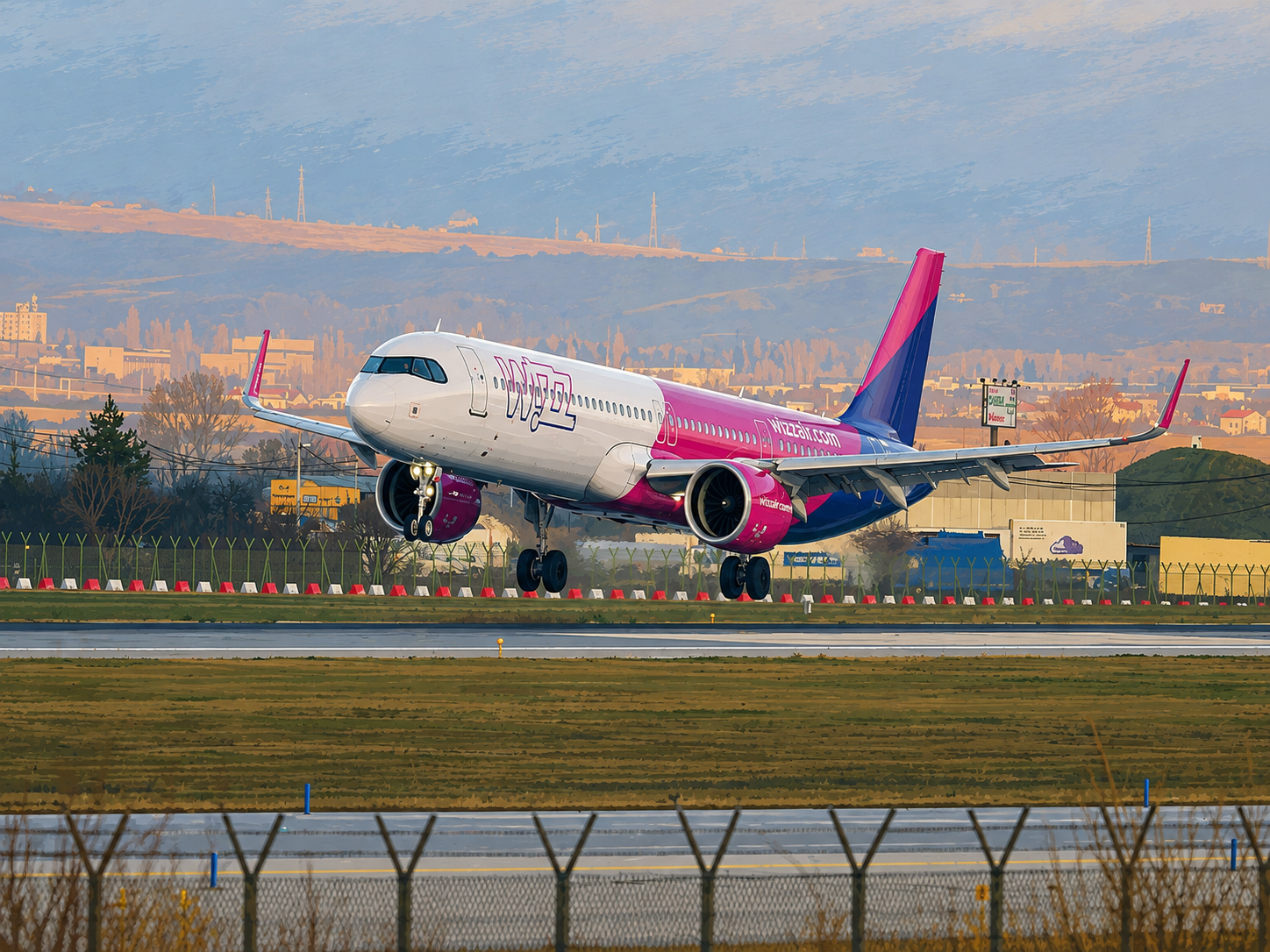

Next month, Hungarian low-cost carrier Wizz Air is set to establish a permanent presence in Spain and enter the country’s massive domestic market. It isn’t difficult to see why the airline wants to enter the Spanish market. After all, Spain is one of the world’s largest tourist destinations, has a growing economy, and is the largest overall aviation market in the EU.
However, the carrier is set to face tough competition from established carriers. Air Europa, Ryanair, as well as IAG’s Iberia and Vueling, all hold significant market share and benefit from strong brand recognition in the Spanish market. Something Wizz Air is very aware of.
Spain Is Not Italy
Traditionally, Wizz Air has focused on Central and Eastern Europe and has faced its fair share of challenges in expanding beyond. However, from 2020 onwards, the airline successfully established a permanent presence in Italy and has grown into one of the country’s largest carriers.
When Wizz opened its first Italian base in 2020, the country’s flag carrier, Alitalia, was weak and on the verge of bankruptcy. Wizz also had a strong cash position at the time, allowing it to leverage competitors' pandemic capacity cuts to gain market share. At the same time, Wizz’s fleet of brand-new and efficient Airbus A321neo aircraft allowed it to compete effectively against Ryanair and EasyJet, which both operated mostly older aircraft with less capacity.
This won’t be the same in Spain, however, as the country has two established network carriers with strong loyalty programs, a homegrown low-cost airline, and Ryanair has over 200 MAX 8-200 aircraft in its fleet while awaiting the delivery of the highly efficient MAX 10. Despite this, it is not hard to see why the management of the Hungarian low-cost carrier has identified Spain as a strategic priority.
Why Spain Makes Sense For Wizz Air
Over the next two months, Wizz Air will base 5 aircraft across three new bases in Madrid (MAD), Valencia (VLC), and Santiago de Compostela (SCQ). The choice of these airports is far from random, and Wizz appears to have a clear strategic reason for all three.
Spain’s busiest hub, Madrid, functions as a large base for Ryanair. However, the Irish low-cost giant has a fairly modest domestic network from the airport. This likely stems from the airline’s preference for stimulating demand rather than competing for it. With Ryanair concentrating much of its Madrid network on international routes, Wizz Air sees an opportunity to target price-sensitive domestic passengers currently served by Iberia and Air Europa.
IAG’s low-cost subsidiary Vueling is almost completely absent from Madrid. Instead, the airline focuses on its fortress hub in Barcelona (BCN), capturing a 40% market share in 2025. Considering Vueling’s massive market share in Barcelona alongside almost every other European low-cost carrier, it makes perfect sense that Wizz has avoided opening a base in Barcelona. Especially given the fact that low yields are currently one of Wizz’s largest strategic challenges.
Valencia, on the other hand, is a different story. Here, Ryanair holds a 45% market share and operates a substantial domestic network. At the same time, however, Vueling has a far less dominant position in Valencia and has, in fact, retracted capacity from Valencia in recent years.
Between 2024 and 2025, Vueling’s passenger numbers in Valencia decreased by 18%, while Wizz Air’s numbers were up by 50% and have since continued to increase capacity from Spain’s third-largest city. Given that Valencia is one of Spain’s fastest-growing cities and open to tourism growth, it is not surprising that Wizz wants to strengthen its position in the Mediterranean city.
“The Battle Of Galicia”
Besides Madrid and Valencia, Wizz Air will also open a base in Santiago de Compostela (SCQ) this December. While the Santiago and Galicia market might not be comparable in size to some other Spanish markets, Wizz’s entry is not a total surprise. Last winter season, Ryanair closed its two-aircraft base at the airport following a dispute over airport charges.
For Wizz, this presents an attractive opportunity to enter a growing and arguably underserved tourism market while avoiding direct competition with its fiercest low-cost competitor.
However, Wizz Air is not the only one that identified this market gap left by Ryanair. Vueling is expanding its Santiago operation, while newcomer Fly2Galicia plans to launch flights in December. Meanwhile, financially troubled Volotea has announced five new domestic routes from nearby A Coruña Airport (LCG). Moreover, Ryanair, being Ryanair, might reopen its base in Santiago just as quickly as it left when it smells profits.
Can Wizz Air Actually Earn Money In Spain?
While Wizz Air's expansion into Spain is strategically understandable, whether the carrier can actually be profitable in Spain is the question. Based on the latest financial results, the airline is rapidly expanding capacity and achieving high load factors across its network. However, the Budapest-based company struggles to generate yields strong enough to cover its cost base.
Spain definitely won’t offer the same favourable competitive environment that allowed Wizz to establish itself in Italy. Wizz’s cash position relative to capacity is also much tighter today than it was in 2020.
Ryanair’s position in Spain remains strong, and it might be worth wondering why it doesn’t have a presence in certain markets. Spain’s high-speed rail network provides an excellent substitute for domestic flights on the mainland, and Aena’s airport charges might, in fact, be a real threat to a low-cost carrier at smaller airports where yields aren’t as high.
Moreover, while Wizz may have a cost advantage compared to the network carriers, these airlines benefit from higher frequencies, connecting traffic, and established loyalty programs. All things considered, profitably entering the highly competitive Spanish domestic market might prove to be very difficult for Wizz Air. Therefore, it remains to be seen whether Wizz can fill its high-capacity A321neo aircraft with high enough yields in an environment where intense competition can quickly erase the advantages of a lower cost base.