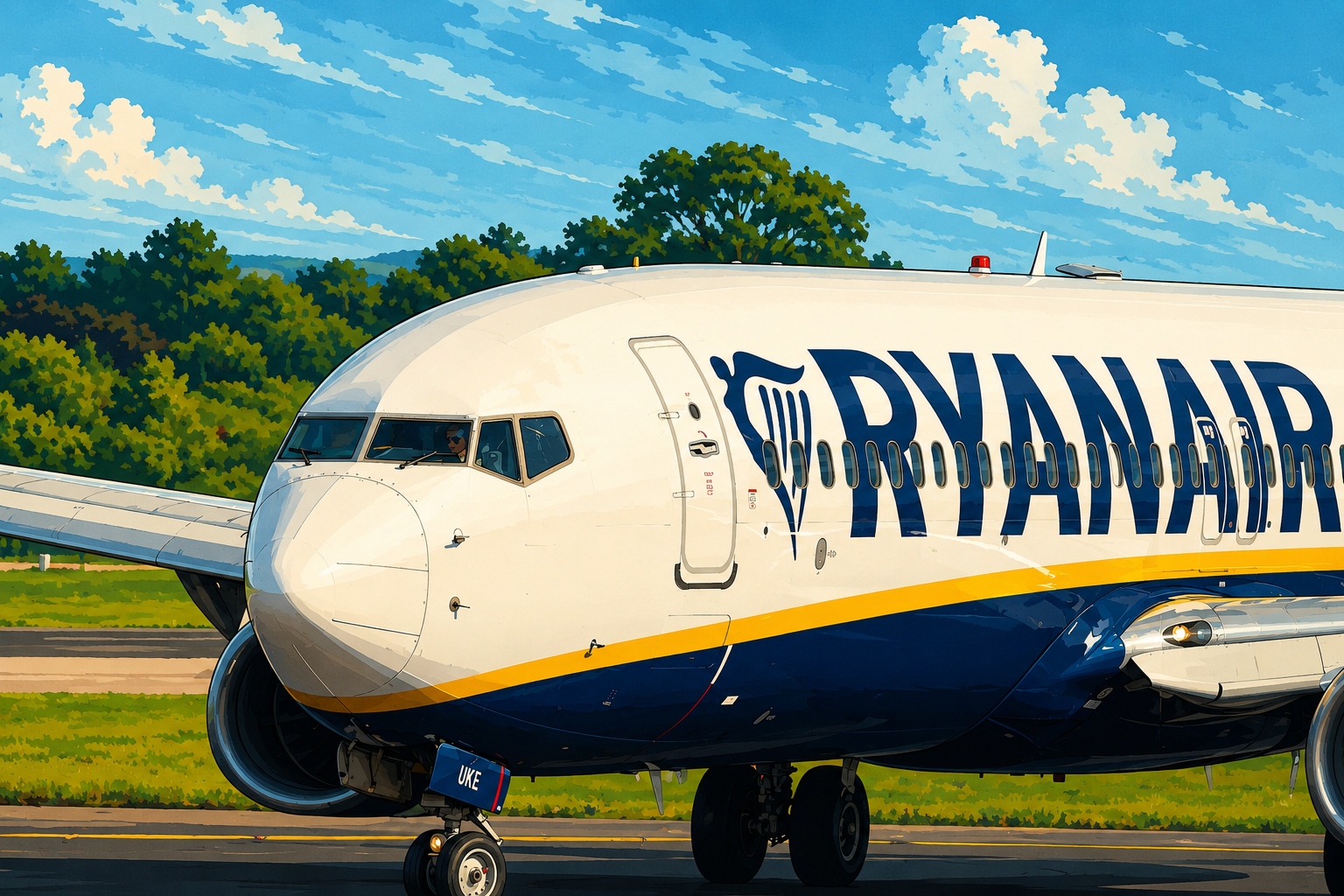

The first months of 2026 have reminded the airline industry how quickly external pressure can expose weak business models, as geopolitical tensions in the Middle East have put additional financial pressure on airlines worldwide. This pressure has already resulted in some casualties, including Spirit Airlines in the United States and Lufthansa CityLine in Germany. More often than not, a crisis is not the cause of an airline insolvency but rather the final blow to an already struggling operation.
At the same time, strong performers tend to leave a crisis stronger than ever and with weakened competition. For several years now, both Ryanair and the International Airlines Group (IAG) have continued to catch my attention with their strong financial performance and disciplined strategies. However, both are succeeding for different reasons. Ryanair is one of aviation’s clearest examples of cost leadership through scale and efficiency. IAG, by contrast, continues to benefit from strong premium demand across the Atlantic, Spain’s large domestic market, and the country’s position as one of Europe’s leading tourist destinations.
Ryanair Remains Europe’s Best Performing Airline
The Irish budget airline closed its last financial year ending March 31st with a net profit of 2.26 billion euros, representing a 40% increase year-over-year. This translates into an operating margin of almost 17%, significantly above the 6.6% operating margin IATA expected for 2025. These results are even more impressive when considering Ryanair’s average air fare of €50.60 for the same period. Given the €24 average ancillary revenue, the airline generated only €74.60 per passenger.
Ryanair’s strong results have helped the airline to strengthen its cash position, reaching 2.1 billion euros at the end of the last financial year. The carrier used this liquidity to repay its outstanding debt of 1.2 billion euros, leaving the airline basically debt-free, while owning its entire fleet of over 600 Boeing 737s. With 80% of its fuel hedged at $67 per barrel until March 2027, the budget airline appears well-positioned to outperform the wider industry over the next twelve months. The next phase of growth is also already visible, with Ryanair still awaiting a large number of factory-new aircraft, including the more efficient Boeing 737 MAX 10.
IAG Stands Out Among Europe’s Network Airline Groups
Another standout performer is IAG, the parent company of British Airways, Iberia, Aer Lingus, Vueling, and LEVEL. In contrast to Ryanair’s low-cost, high-volume model, IAG continues to profit from premium long-haul demand and some of Europe’s strongest hub positions. For the last financial year, the British-Spanish airline group reported a 15.1% operating profit margin, far above IATA’s industry estimate for the same period. The absolute operating profit increased 13.1% compared to a year earlier, exceeding 5 billion euros in 2025. Free cash flow stood at 3.1 billion euros at the end of the financial year, allowing the company to absorb short-term shocks while continuing to invest in future growth.
While this full-year result is already excellent, something that stands out even more is the group’s 4.9% operating margin in the first quarter of 2026. Traditionally, this period is the weakest for air travel in Europe as the continent's demand patterns are highly seasonal. At the same time, competitors Air France-KLM and Lufthansa Group both reported negative operating margins of -0.4% and -7.0%, respectively.
| Airline | FY25 | Q1 26 |
|---|---|---|
| British Airways | 15.2% | 5.5% |
| Iberia | 16.2% | 9.1% |
| Vueling | 12.0% | -4.6% |
| Aer Lingus | 11.1% | -24.5% |
On an individual airline level, Iberia was Europe’s strongest performer in the first quarter, reporting a 9.1% margin, followed by British Airways at 5.5%. In the last full fiscal year, the operating margins were 16.2% and 15.2%, respectively. These strong results were primarily driven by robust performance in their core markets, with Iberia benefiting from high demand between Spain and Latin America, while British Airways is experiencing strong premium demand on flights across the North Atlantic.
Beyond British Airways and Iberia
While British Airways and Iberia represented the largest part of the group’s revenue last year, they are not the only strong performers. The group’s low-cost carrier, Vueling, achieved a full-year operating margin of 12.0%, making it one of Europe’s most profitable low-cost carriers behind Ryanair.
Despite this, the Barcelona-based airline reported an operating result of -4.6% for the first quarter of the year, an improvement over the prior year. These results make Vueling the best-performing low-cost subsidiary among Europe’s major airline groups. For comparison, in the first quarter of this year, Lufthansa’s Eurowings reported an adjusted EBIT margin of -44.9%, while Air France-KLM’s Transavia reported an operating margin of -40.7%.
Aer Lingus was the clear weak spot in the first quarter. The Irish airline reported an 11.1% full-year operating margin for 2025. In the first quarter of this year, the airline’s operating margin declined by 12 percentage points year-over-year to -24.5%. According to the company, this can be attributed to competitive pressure across the Atlantic, which led to declining yields. Interestingly, IAG Loyalty was the group’s highest-margin segment, with an 18% full-year operating margin. After Iberia, it was the fastest-growing business unit of the group, with revenue up 7% versus a year earlier. IAG did not report any independent metrics on its long-haul low-cost subsidiary LEVEL.
| Segment | Revenue Share | Operating Profit Share |
|---|---|---|
| Aer Lingus | 7.6% | 5.6% |
| British Airways | 44.2% | 44.4% |
| Iberia | 24.3% | 26.1% |
| Vueling | 9.8% | 7.8% |
| IAG Loyalty | 7.8% | 9.3% |
| Other | 6.2% | 6.7% |
Despite IAG’s strong performance, the company is also not immune to increasing costs, and it is expected that higher fuel costs will impact the bottom line over the next year. According to the latest shareholder presentation, IAG has hedged 70% of its fuel until the end of the year. Around 60% of the additional fuel costs can be absorbed through cost reductions and revenue improvements. Similar to Ryanair, and despite short-term headwinds, IAG also appears well-positioned to outperform in the years to come.
Why Ryanair And IAG Are Built To Keep Outperforming
Ryanair and IAG prove there is more than one way to succeed in the harsh European aviation industry. Ryanair’s advantage comes from cost leadership, scale, and operational efficiency, whereas IAG operates multiple brands, each with a strong position in its own strategic market. What both companies have in common is strategic discipline and a continued focus on their core strengths.
This also creates vulnerabilities in both models. Ryanair’s strength depends on finding enough growth markets that can support its low-cost base, while maintaining strong negotiating power with airports. IAG, meanwhile, is heavily dependent on premium long-haul demand, British Airways’ position across the Atlantic, Iberia’s Latin American network, and Spain’s continued appeal as a major travel market. If either company loses the conditions that support its model, today’s competitive advantage could narrow quickly, forcing management to adapt.
However, in the short to medium term, this does not appear to be a major concern. If any two European airline businesses are well positioned to overcome these challenges, they are Ryanair and IAG.